

Introduction
Have you ever wondered what enzyme breaks down starch in the food you eat? The answer is amylase, a digestive enzyme that plays an important role in carbohydrate digestion. Starch is a complex carbohydrate found in foods such as potatoes, rice, bread, pasta, and cereals. Because the body cannot absorb starch in its original form, enzymes must break it into smaller carbohydrates that can eventually be converted into glucose.
The digestion of starch begins in the mouth, where salivary amylase starts breaking it down as you chew. The process continues in the small intestine, where pancreatic amylase helps digest the remaining starch. Understanding how amylase works can help you learn more about digestion, energy production, and the role of enzymes in the body.
In this guide, we’ll explore the enzyme that breaks down starch, how amylase works, where starch digestion takes place, what starch becomes after digestion, and why this process is important for your body.
What enzyme breaks down starch?
The main enzyme that breaks down starch is amylase. Your body produces amylase mainly in the salivary glands and pancreas. It breaks large starch molecules into smaller carbohydrates, including maltose and other shorter chains that your digestive system can process further.
Starch appears in everyday foods such as bread, rice, potatoes, pasta, corn, and cereals. Although these foods look very different, they contain starch that your digestive system must break apart before your body can use its energy.
Understanding the enzyme that breaks down starch helps you see how digestion works from your first bite to the small intestine. It also explains why chewing matters, how pancreatic enzymes continue digestion, and why starch does not remain in its original form after you eat it.
The process is surprisingly efficient. Your digestive system uses enzymes at different stages, with each one performing a specific job. Amylase starts the process, while other enzymes complete the conversion of starch into simple sugars that your body can absorb.
What is the enzyme responsible for starch digestion?
Amylase is the primary enzyme responsible for starch digestion.
Your body uses two major forms of amylase:
| Type of amylase | Where it is produced | Main role |
|---|---|---|
| Salivary amylase | Salivary glands | Starts starch digestion in your mouth |
| Pancreatic amylase | Pancreas | Continues starch digestion in the small intestine |
Both enzymes help break the chemical bonds found in starch. They work by hydrolyzing starch into smaller carbohydrate molecules.
This process does not turn all starch directly into glucose. Instead, amylase produces smaller carbohydrates that other digestive enzymes can process further.
That distinction is important because digestion happens in stages rather than through one enzyme performing the entire job.
Does amylase break down starch?
Yes, amylase breaks down starch.
Starch consists mainly of long chains of glucose units. These chains are too large for your intestine to absorb directly. Amylase cuts specific bonds within these chains and produces smaller carbohydrates.
The main products include: quickcarthub
- Maltose
- Maltotriose
- Shorter glucose chains
- Dextrins
Your small intestine then uses enzymes such as maltase and other carbohydrate digesting enzymes to break these smaller molecules into glucose and other absorbable sugars.
Glucose can then enter your bloodstream and become available to cells for energy.
Why does amylase not finish starch digestion?
Amylase cannot break every type of bond found in starch.
Starch contains two major components called amylose and amylopectin. Their structures differ, so digestion requires more than one enzyme.
Amylase handles much of the initial breakdown. Enzymes located on the surface of cells lining your small intestine complete the final steps.
This teamwork makes carbohydrate digestion possible. quickcarthub
Where does starch digestion begin?
Starch digestion begins in your mouth.
When you chew starchy food, your salivary glands release saliva containing salivary amylase. The enzyme begins breaking starch into smaller carbohydrate molecules while you are still eating.
Chewing also increases the surface area of food. This gives digestive enzymes more opportunity to interact with the starch.
Your mouth therefore does more than simply prepare food for swallowing.
It begins the chemical digestion of carbohydrates.
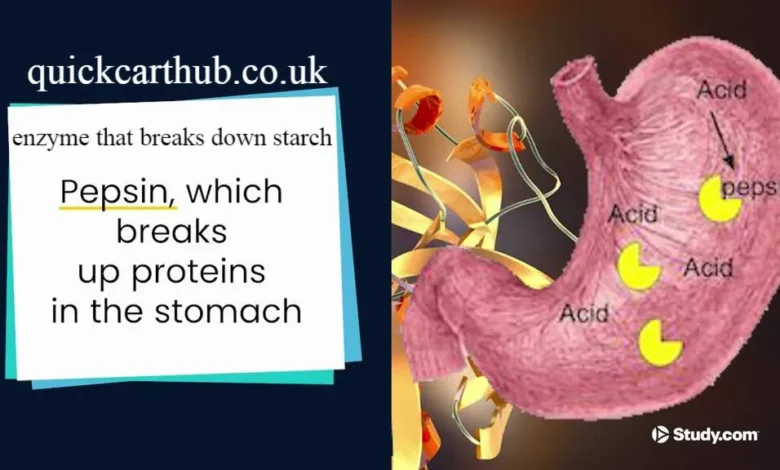
What happens to starch in the stomach?
Starch digestion slows significantly in the stomach.
Your stomach contains hydrochloric acid, which creates a strongly acidic environment. Salivary amylase becomes much less active under these conditions.
However, digestion does not stop completely as food moves through the digestive tract.
Once the partially digested food enters the small intestine, pancreatic amylase becomes important again.
How does pancreatic amylase break down starch?
The pancreas releases pancreatic amylase into the first part of the small intestine. source: Encyclopedia Britannica
The enzyme continues breaking starch into smaller carbohydrates. This stage is essential because most carbohydrate digestion and absorption takes place in the small intestine.
A simplified sequence looks like this:
- You eat a starchy food.
- Chewing mixes the food with saliva.
- Salivary amylase begins starch digestion.
- The food reaches the stomach.
- Acid reduces salivary amylase activity.
- The partially digested food enters the small intestine.
- The pancreas releases pancreatic amylase.
- Amylase produces smaller carbohydrates.
- Intestinal enzymes break them down further.
- Glucose and other simple sugars can then be absorbed.
This staged process allows your digestive system to handle complex carbohydrates efficiently.
What foods contain starch?
Many common foods provide starch. The amount varies depending on the food, serving size, preparation method, and variety.
Common starch containing foods include:
- Rice
- Bread
- Pasta
- Potatoes
- Corn
- Oats
- Wheat
- Barley
- Beans
- Peas
- Breakfast cereals
Starch is a major dietary carbohydrate and provides energy when your body digests and absorbs its glucose components.
Whole grains can also provide fiber, vitamins, minerals, and other beneficial plant compounds. This means the nutritional value of a food depends on much more than its starch content.

What is the difference between amylase and maltase?
Amylase and maltase both participate in carbohydrate digestion, but they perform different jobs.
| Enzyme | Main function |
|---|---|
| Amylase | Breaks starch into smaller carbohydrates |
| Maltase | Breaks maltose into glucose |
| Sucrase | Breaks sucrose into glucose and fructose |
| Lactase | Breaks lactose into glucose and galactose |
Think of amylase as an enzyme that starts cutting a large carbohydrate structure into smaller pieces.
Maltase then helps complete part of the process by breaking maltose into individual glucose molecules.
This division of labor makes digestion more efficient. source: Amano Enzyme Inc.
Why is starch digestion important?
Starch digestion matters because it helps your body obtain usable energy from carbohydrate rich foods.
Glucose produced through carbohydrate digestion can enter cells and contribute to energy production. Your brain, muscles, and other tissues can use glucose as an important energy source.
The process also helps your digestive system distinguish between carbohydrates that can be digested and components such as certain dietary fibers that resist digestion in the small intestine.
This is one reason your digestive system needs several enzymes rather than one enzyme alone.
What happens if starch is not completely digested?
Not all starch is necessarily digested in the same way.
Some starch can resist digestion in the small intestine. This type is commonly called resistant starch.
Instead of being fully broken down and absorbed in the small intestine, resistant starch can reach the large intestine. There, certain gut microorganisms can ferment it.
This process produces compounds such as short chain fatty acids.
The amount of resistant starch you consume can depend on the food and how you prepare and store it. For example, cooking and subsequent cooling can change the structure of starch in some foods.
What affects starch digestion?
Several factors can influence how quickly and efficiently your body digests starch.
Food structure
Finely processed foods can be easier for digestive enzymes to access than intact foods.
Cooking
Cooking generally makes starch more accessible to digestive enzymes by changing its physical structure.
Fiber
Fiber can affect how quickly food moves through your digestive system and can influence the digestion and absorption of carbohydrates.
Food composition
Eating starch alongside protein, fat, fiber, or other foods can change the overall digestion and absorption pattern.
Individual differences
Digestive function varies between people. Your overall diet, gut environment, and metabolic health can influence how your body handles carbohydrates.
Amylase in saliva versus the pancreas
Both forms of amylase digest starch, but they work in different locations.
Salivary amylase acts first. It begins breaking starch down while food is in your mouth and continues working for a limited time after swallowing.
Pancreatic amylase becomes important once the food reaches the small intestine. It performs extensive starch digestion before intestinal enzymes finish converting the resulting carbohydrates into absorbable sugars.
The two enzymes therefore work as part of one coordinated digestive system.
Why chewing starchy foods matters
You do not need to count how many times you chew, but thorough chewing has a useful role in digestion.
Chewing physically breaks food into smaller pieces. Saliva then mixes with those pieces and provides salivary amylase.
If you eat quickly and swallow large pieces, the digestive system still continues its work. However, chewing is the first mechanical and chemical stage of carbohydrate digestion.
A simple habit is to slow down and chew your food comfortably rather than rushing through meals.
Key facts about the enzyme that breaks down starch
Here are the most important points to remember:
- Amylase is the primary enzyme that breaks down starch.
- Salivary amylase starts digestion in the mouth.
- Pancreatic amylase continues digestion in the small intestine.
- Amylase produces smaller carbohydrates rather than converting all starch directly into glucose.
- Intestinal enzymes complete the final stages of carbohydrate digestion.
- Starch is found in foods such as rice, potatoes, bread, pasta, corn, and grains.
- Some starch can resist digestion and reach the large intestine.
- Cooking and food structure can influence starch digestibility.
Frequently Asked Questions
What enzyme breaks down starch into sugar?
Amylase breaks starch into smaller carbohydrates. Other intestinal enzymes then convert these products into simple sugars such as glucose.
Does saliva contain an enzyme that breaks down starch?
Yes. Saliva contains salivary amylase, which begins breaking down starch in your mouth.
Where is amylase produced?
Your salivary glands produce salivary amylase, while your pancreas produces pancreatic amylase.
Does amylase turn starch directly into glucose?
No. Amylase first breaks starch into smaller carbohydrates. Other enzymes complete the digestion process and produce glucose.
What enzyme breaks down starch in the small intestine?
Pancreatic amylase is the main enzyme that breaks down starch in the small intestine.
What foods contain starch?
Rice, bread, potatoes, pasta, corn, oats, wheat, barley, beans, peas, and many cereals contain starch.
Can starch be digested without amylase?
Amylase plays a major role in normal starch digestion. Other enzymes participate in the later stages, but amylase is essential for breaking large starch molecules into smaller carbohydrates.
Is resistant starch completely digested?
Resistant starch can escape digestion in the small intestine. Some of it reaches the large intestine, where gut microorganisms can ferment it.
Conclusion
The enzyme that breaks down starch is primarily amylase. Salivary amylase starts the process in your mouth, while pancreatic amylase continues it in the small intestine. Other digestive enzymes then break the resulting carbohydrates into smaller sugars that your body can absorb.
This process explains why starch digestion is a coordinated chain of events rather than the work of one enzyme alone.
Once you understand how amylase works, everyday foods such as rice, bread, potatoes, and pasta become easier to understand from a digestive perspective. Your body uses several specialized enzymes to turn complex carbohydrates into forms your cells can use.
So the next time you eat a starchy meal, remember that digestion begins before the food even reaches your stomach.
About the Author: Awais khan The author writes easy to understand health, nutrition, and science content focused on turning complex topics into practical information. The goal is to provide clear, reader friendly explanations backed by established scientific knowledge.
email: johanharwen@314gmail.com
Author Name: Awais khan