

If you searched for “ice cream chain closing 500 stores,” you are probably referring to Thrifty Ice Cream and the closure of hundreds of its scoop counters inside Rite Aid pharmacies.
The important distinction is that Thrifty Ice Cream itself did not permanently shut down 500 standalone ice cream stores. The approximately 500 locations were primarily Thrifty scoop counters inside Rite Aid stores that were affected by Rite Aid’s 2025 bankruptcy and store liquidation.
There is also good news for longtime fans. Thrifty was sold to Hilrod Holdings for $19.2 million in 2025, becoming an independent company rather than disappearing with Rite Aid. The brand continues to produce and sell ice cream and says it is expanding its availability across the United States.
What happened to the 500 Thrifty Ice Cream locations?
The 500 closures were connected to Rite Aid, not a decision by Thrifty to eliminate its entire business.
Thrifty Ice Cream had a long relationship with the drugstore chain. Rite Aid acquired Thrifty PayLess and its ice cream business in 1996 and continued operating Thrifty counters in many pharmacies, particularly across the West Coast. By 2018, Rite Aid had more than 500 Thrifty Ice Cream stations.
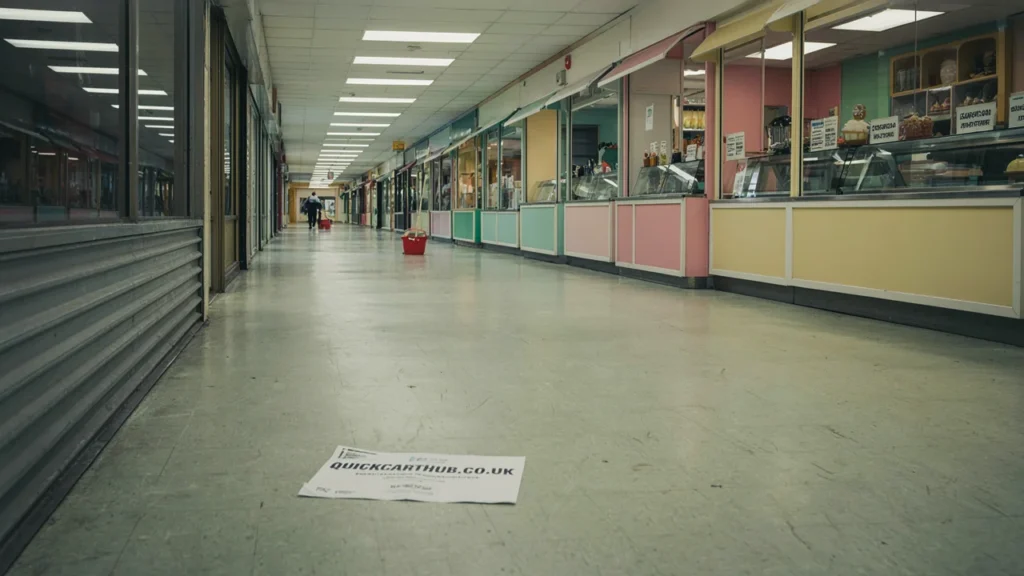
When Rite Aid entered another Chapter 11 bankruptcy proceeding in May 2025, the company began selling stores and assets while winding down its retail footprint. Because many Thrifty counters existed inside Rite Aid pharmacies, those counters disappeared as the pharmacies closed.
So the headline “ice cream chain closing 500 stores” was somewhat misleading. The closures represented the loss of hundreds of in-store counters, rather than 500 independent Thrifty restaurants.
Why was Thrifty Ice Cream closing 500 stores?
The direct cause was Rite Aid’s bankruptcy and store closures.
Rite Aid filed for Chapter 11 in May 2025, its second bankruptcy filing in less than two years. The pharmacy retailer was dealing with substantial debt and a shrinking retail footprint. Its restructuring involved selling pharmacy assets and closing or transferring stores.
For Thrifty, this created a major problem: many customers encountered the brand through a Rite Aid counter.
When a Rite Aid location closed, the Thrifty ice cream service inside that store generally disappeared with it.
The key facts
| Question | Answer |
|---|---|
| Were 500 standalone Thrifty stores closing? | No |
| What closed? | Many Thrifty counters inside Rite Aid stores |
| Why? | Rite Aid’s bankruptcy and retail closures |
| Did Thrifty Ice Cream go bankrupt? | No |
| Did the brand survive? | Yes |
| Who acquired Thrifty? | Hilrod Holdings |
| Acquisition price | $19.2 million |
| Is Thrifty still available? | Yes |
Is Thrifty Ice Cream going out of business?
No. Thrifty Ice Cream is not going out of business as of September 2026.
The situation changed significantly after the initial 2025 reports.
In June 2025, Hilrod Holdings emerged as the winning bidder for the Thrifty Ice Cream business and related assets. The transaction was approved in July for $19.2 million. Hilrod is associated with Monster Beverage executives Hilton Schlosberg and Rodney Sacks.
Thrifty’s own history now describes 2025 as the beginning of a new independent chapter. The company says its focus includes wider distribution, updated packaging and additional flavors while preserving its traditional identity.
That means the story is better described as a major retail distribution change rather than the death of the Thrifty ice cream brand.
Where can you still buy Thrifty Ice Cream?
Thrifty Ice Cream remains available through retailers, scoop counters and other distribution channels.
The company’s current FAQ says customers can find Thrifty in freezer sections and at scoop counters across California, Arizona and a growing number of other U.S. regions and Mexico. The company also offers nationwide shipping through its online shop.
Current Thrifty distribution includes retailers such as:
- Albertsons
- Vons
- Food 4 Less
- Foods Co.
- Smart & Final
- Independent markets
- Other participating retailers
The exact availability varies by location, so customers should check the official Thrifty store locator before traveling to a specific store. The company’s locator warns that third-party retail locations can change.
Thrifty Ice Cream official store locator
What happened to Thrifty Ice Cream’s Rite Aid locations?
The relationship between Thrifty Ice Cream and Rite Aid effectively changed after Rite Aid’s liquidation.
Rite Aid eventually closed all of its remaining locations in 2025. Retail Dive reported in October 2025 that the pharmacy retailer had closed all its stores after filing its second Chapter 11 case that year.
That means customers should not expect the old Rite Aid-based Thrifty counter model to return simply because the ice cream brand survived.
The important difference is:
Rite Aid’s retail stores disappeared, but Thrifty Ice Cream did not.
What is the history of Thrifty Ice Cream?
Thrifty is much older than its relationship with Rite Aid.
The brand traces its roots to the Thrifty Drug Store business in Los Angeles. According to the company’s official history, the first Thrifty Cut Rate Drug Store opened at 412 S. Broadway in downtown Los Angeles in 1929. Thrifty Ice Cream was introduced in 1940 as an affordable treat sold through the drugstore chain.
The original ice cream production operation was associated with a Hollywood factory, while a larger facility opened in El Monte, California, in 1976.
That El Monte facility remains an important part of the brand’s identity and production story.
Thrifty also developed a reputation for awards. The company says it has won more than 1,000 gold, silver and bronze medals at competitions and county fairs over the past five decades. Source: TheStreet
Why does Thrifty Ice Cream have a square scoop?
The famous Thrifty square scoop is actually closer to a cylindrical, flat-ended scoop than a traditional round ball.
The distinctive shape comes from Thrifty’s custom scooping device, introduced alongside the ice cream in 1940. The company’s current explanation says the tool was designed to make hard ice cream easier for employees to serve.
Instead of producing the familiar round scoop found at many ice cream shops, the device creates a compact cylinder with a flat top.
Thrifty describes the design as a way to pack more ice cream into each serving while creating the visual style that became synonymous with the brand.
For longtime customers, the Thrifty scoop is more than a serving method. It is part of the brand’s nostalgia.
The company eventually made its signature scoop available to consumers, allowing fans to recreate the experience at home.
What are some unusual Thrifty Ice Cream flavors?
Thrifty has never been limited to standard vanilla and chocolate.
The brand has experimented with unusual flavors and collaborations, including:
- Sriracha Swirl
- Bacon & Cheddar
- Chuck E. Cheese Birthday Cake
- Rainbow Sherbet
- Butter Pecan
- Chocolate Malted Krunch
In October 2024, Thrifty introduced a Chuck E. Cheese birthday cake flavor as part of a collaboration with the entertainment brand.
The company’s willingness to experiment helps explain why Thrifty has developed a following beyond its traditional pharmacy-counter audience.
Which celebrity is associated with Thrifty Ice Cream?
Kourtney Kardashian Barker has publicly been associated with the brand.
Time Out reported that Kardashian Barker has enjoyed Thrifty flavors including rainbow sherbet and butter pecan. Thrifty was also featured at her Camp Poosh event around Coachella.
That kind of celebrity association is useful for a heritage brand because it connects Thrifty’s old-school identity with a newer lifestyle audience.
What happens to Thrifty after the Rite Aid closures?
The most important development is that Thrifty now has an opportunity to build a business that is not dependent on a national drugstore chain.
Before the Rite Aid collapse, the pharmacy counter was one of the most recognizable ways customers encountered the brand. After the closures, Thrifty’s future depends more heavily on:
- Grocery-store distribution
- Independent scoop counters
- New retail partnerships
- Online sales
- Events and mobile ice cream service
- Expansion into additional U.S. markets
The company’s current website explicitly describes the brand as expanding across the nation, with plans to bring its flavors to more communities, retailers and events.
Thrifty also promotes a Scoopmobile, allowing the brand to serve its ice cream at parties, schools, company events and other gatherings.
This represents an interesting shift: instead of relying primarily on a drugstore counter, Thrifty can use multiple distribution channels.
Is there hope for Thrifty Ice Cream?
Yes. The brand’s post-Rite Aid strategy suggests a more independent future rather than an immediate disappearance.
The $19.2 million acquisition gave Thrifty new ownership and separated the ice cream business from Rite Aid’s collapsing retail model.
The biggest challenge is preserving what made the brand special while reaching customers who never experienced the old Rite Aid counters.
Its strongest assets are its:
- Long history dating to 1940
- Recognizable cylindrical scoop
- Southern California identity
- Award history
- Established flavors
- Grocery-store presence
- Nostalgic customer base
- New ownership and distribution plans
In other words, the Thrifty Ice Cream 500-store closure was a major setback for its traditional retail presence, but it was not the end of the brand.
What should customers expect next?
Customers should expect Thrifty to look less like a pharmacy-counter brand and more like an independent ice cream company.
The company’s current website promotes packaged products, single-serve cups, pints, 48-ounce containers and 3-gallon formats, along with scoop counters and event service.
That wider product mix could help Thrifty reach customers who may never find a traditional scoop shop.
For fans in Los Angeles and elsewhere in Southern California, the brand’s heritage remains central. But the post-Rite Aid strategy gives Thrifty a chance to become a broader national retail brand.
Bottom line: Is the ice cream chain closing 500 stores?
The 500 closures referred to Thrifty Ice Cream counters inside Rite Aid stores, not 500 standalone Thrifty stores.
Rite Aid’s bankruptcy caused those counters to disappear as the pharmacy chain closed its locations. But Thrifty itself survived, was sold to Hilrod Holdings for $19.2 million in 2025 and is now operating independently.
As of September 2026, Thrifty Ice Cream continues to sell packaged products, operate or supply scoop counters and pursue broader distribution.
So if you remember getting a flat-topped Thrifty scoop at a Rite Aid, that particular experience may be gone. But the ice cream brand itself is still here.
Frequently Asked Questions
Is an ice cream chain closing 500 stores in California?
The widely reported 500 closures involved Thrifty Ice Cream counters inside Rite Aid locations, with a large concentration of the brand’s presence historically in California. They were tied to Rite Aid’s 2025 bankruptcy and store closures rather than a decision to close 500 independent Thrifty ice cream shops.
Is a retailer closing all stores?
In the Thrifty story, Rite Aid eventually closed all of its remaining stores in 2025. That is why the pharmacy-based Thrifty counters disappeared.
Is Thrifty Ice Cream still in business?
Yes. Thrifty Ice Cream remains in business under independent ownership and says it is expanding its distribution across the United States.
Are Dairy Queen franchise locations closed near me?
A particular Dairy Queen location can close or have different operating hours because most DQ restaurants are independently owned and operated franchises. The official DQ location directory can be used to check individual restaurants.
Why is Dairy Queen closing?
There is no evidence that Dairy Queen is closing all of its restaurants. Individual locations can close for local business reasons, but the DQ system continues to operate thousands of restaurants worldwide. Its official FAQ currently lists more than 7,800 restaurants in more than 20 countries.
Is Dairy Queen closing all locations?
No. Dairy Queen is not closing all locations. The company continues to operate through a large network of independently owned franchises, and its official U.S. location directory remains active.
Read more….