

Introduction
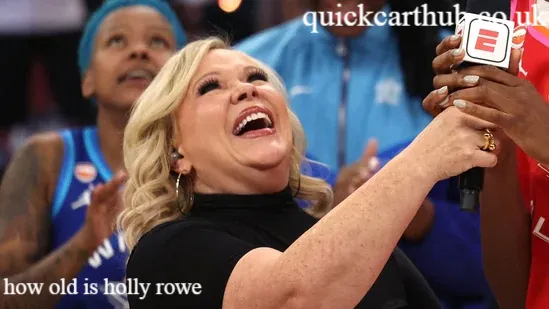
If you have watched college basketball, college football, or major women’s sporting events, you have probably heard Holly Rowe deliver an interview from the sidelines. Her energetic style, deep sports knowledge, and ability to connect with athletes have made her one of the most recognizable voices in American sports broadcasting.
So, how old is Holly Rowe? Holly Rowe is 60 years old as of August 2026. She was born on June 16, 1966, in Woods Cross, Utah. Her career has now stretched across more than three decades, with much of that time spent working with ESPN and ABC.
Knowing how old is Holly Rowe also puts her long career into perspective. She has covered college football, college basketball, softball, volleyball, gymnastics, soccer, swimming, track and field, the WNBA, and several major championship events.
This article looks at Holly Rowe’s age, birthday, career, education, major achievements, and the milestones that have helped make her such an influential sports broadcaster.
How old is Holly Rowe?
Holly Rowe is 60 years old as of August 21, 2026.
She was born on June 16, 1966. Her birthplace is Woods Cross, Utah, a community located near Salt Lake City. Multiple biographical sources identify June 16, 1966 as her date of birth.
Here are the key facts at a glance:
| Detail | Information |
|---|---|
| Full name | Holly Rowe |
| Age | 60 years old |
| Date of birth | June 16, 1966 |
| Birthplace | Woods Cross, Utah |
| Profession | Sports reporter and commentator |
| Major network | ESPN |
| Education | University of Utah |
| Career in sports media | More than 30 years |
| Known for | College sports and WNBA coverage |
The age calculation is straightforward. Holly Rowe turned 60 on June 16, 2026. That means she was already 60 by August 2026.
When is Holly Rowe’s birthday?
Holly Rowe celebrates her birthday on June 16 every year.
Her birth year, 1966, is important when looking at the timeline of her broadcasting career. She entered the sports media world at a time when opportunities for women in sports broadcasting were much more limited than they are today.
Her career therefore represents more than longevity. It also reflects how sports television has changed over several decades.
Where was Holly Rowe born?
Holly Rowe was born in Woods Cross, Utah.
Her connection to Utah has remained an important part of her story. She studied broadcast journalism at the University of Utah and also spent time at Brigham Young University. Her official biography says she graduated from the University of Utah with a broadcast journalism degree.
In a 2024 interview with Oklahoma State University, Rowe explained that she knew from a young age that she wanted to become a reporter. She also described having a strong passion for sports from childhood.
That early interest eventually became a long term professional career.
How long has Holly Rowe worked for ESPN?
Holly Rowe joined ESPN full time in August 1998.
Before becoming a full time ESPN employee, she appeared on selected ESPN telecasts in 1997. She also worked with ABC Sports during 1995 and 1996.
This means her full time ESPN career has lasted about 28 years as of 2026.
Her broader career in sports journalism has lasted more than 30 years. Her personal website describes her as having more than three decades of experience in sports journalism.
Holly Rowe career timeline
A simple timeline helps explain just how long she has been involved in sports media.
- 1966: Holly Rowe was born in Utah.
- 1980s: She pursued education related to broadcasting and journalism.
- 1990s: She began building her professional sports media career.
- 1995 and 1996: She worked with ABC Sports.
- 1997: She appeared on selected ESPN broadcasts.
- 1998: She joined ESPN full time.
- 2021: She made history as the first female color commentator for the Utah Jazz.
- 2022: She won a Sports Emmy for Outstanding Personality and Reporter.
- 2026: She continues her work as a prominent sports broadcaster.
ESPN confirms her 1998 full time start and highlights her extensive work across several sports.
What sports does Holly Rowe cover?
Holly Rowe is known for her versatility.
While many viewers associate her with college football and college basketball, her work extends across a much wider range of sports.
ESPN lists her coverage of:
- College football
- Women’s college basketball
- The NCAA Women’s Final Four
- The NCAA Women’s College World Series
- WNBA games
- Volleyball
- Softball
- Gymnastics
- Soccer
- Swimming
- Track and field
- The Little League World Series
She has also handled play by play assignments in women’s college basketball, softball, volleyball, and gymnastics.
That range is one reason her career stands out. She has not limited herself to a single sport or broadcasting role.
What did Holly Rowe achieve with the Utah Jazz?
One of Holly Rowe’s major career milestones came in 2021, when she became the first female color commentator in Utah Jazz history.
The milestone occurred during a game against the Sacramento Kings on October 22, 2021. source: The University of Utah
The achievement was significant because Rowe had already spent years covering sports at the highest levels. Her move into an NBA broadcast role showed the breadth of her experience and knowledge.
For fans wondering how old is Holly Rowe while considering this milestone, she was 55 years old when she made Jazz history.
Her career demonstrates that major broadcasting opportunities do not have to stop at a particular age.
Has Holly Rowe won any major awards?
Yes. Holly Rowe has received important recognition for her work.
ESPN reports that Rowe won the 2022 Sports Emmy for Outstanding Personality and Reporter. She also received the 2022 Mel Greenberg National Media Award from the Women’s Basketball Coaches Association.
She was also recognized in the College Sports Communicators awards history. The organization lists Holly Rowe as the 2019 recipient of its award for a college sports communicator.
These honors provide useful context when considering how old is Holly Rowe. Her career has not simply lasted for decades. It has continued to receive professional recognition during the later stages of her career.
Why is Holly Rowe so popular with sports fans?
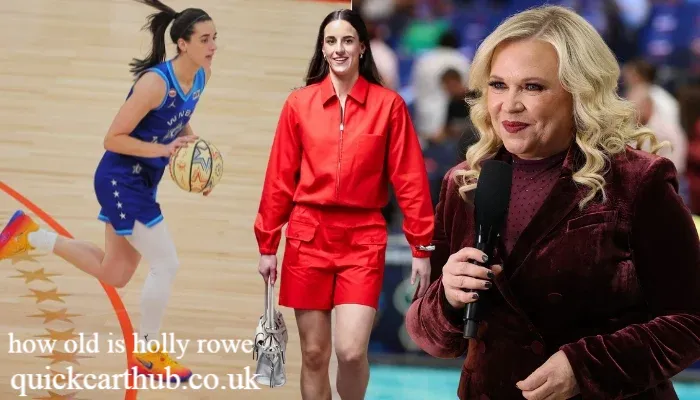
Holly Rowe’s appeal comes from the way she combines preparation with personality.
She often speaks with athletes during emotionally intense moments. A successful interview requires more than simply asking questions. A reporter needs to understand the situation, listen carefully, and respond naturally.
Rowe has developed a reputation for doing exactly that.
Her long career has also allowed her to build knowledge across multiple sports. That experience helps her move comfortably between college football, basketball, volleyball, softball, and other events.
Her own comments about loving sports from childhood help explain why the work feels natural to her. She has described herself as someone who has always been passionate about sports and reporting.
What can Holly Rowe’s career teach you?
Holly Rowe’s career offers several useful lessons. source: Hindustan Times
Experience can become an advantage
Rowe has spent decades learning how athletes, coaches, broadcasters, and live events work. That experience can make a major difference when a broadcast becomes unpredictable.
Versatility creates opportunities
She has worked across many sports instead of building her entire career around one assignment. That flexibility has helped her remain relevant as broadcasting has evolved.
Passion can support longevity
Rowe has repeatedly described her love of sports and reporting. Her career shows how genuine interest can support long term professional growth.
Age does not define professional value
The question how old is Holly Rowe often comes from curiosity about her long career. At 60, she continues to work at a high level. Her career demonstrates that experience can remain a major professional strength.
How old is Holly Rowe compared with her ESPN career?
The numbers make her career especially interesting.
Holly Rowe was born in 1966. She joined ESPN full time in 1998.
That means she was approximately 32 years old when she became a full time ESPN broadcaster.
By 2026, she has spent roughly 28 years with ESPN. source: Facebook · ESPN PR
Her full career in sports journalism extends beyond her ESPN years, giving her more than three decades of professional experience.
| Career milestone | Approximate age |
|---|---|
| Born in 1966 | 0 |
| Began developing her journalism career | Young adult |
| Joined ABC Sports | Late 20s |
| Joined ESPN full time in 1998 | 32 |
| Became first female Jazz color commentator in 2021 | 55 |
| Won Sports Emmy in 2022 | 56 |
| Reached age 60 in 2026 | 60 |
This timeline shows why the question how old is Holly Rowe is more interesting than it may initially seem. Her age tells only part of the story. The bigger story is how consistently she has remained active in a rapidly changing industry.
What is Holly Rowe doing today?
As of 2026, Holly Rowe remains active in sports broadcasting.
ESPN describes her as a reporter and play by play commentator. Her assignments continue to include major college sports and WNBA coverage.
Her professional website also highlights her work as a producer, writer, media trainer, and speaker.
Her career has therefore expanded beyond traditional sideline reporting. She has built a broader role around sports media, communication, and professional speaking.
Frequently Asked Questions
How old is Holly Rowe in 2026?
Holly Rowe is 60 years old in 2026. She was born on June 16, 1966.
When was Holly Rowe born?
Holly Rowe was born on June 16, 1966, in Woods Cross, Utah.
Is Holly Rowe still working for ESPN?
Yes. Holly Rowe continues to work as a reporter and commentator for ESPN and its sports broadcasts.
How long has Holly Rowe been with ESPN?
She joined ESPN full time in August 1998. That gives her about 28 years with the network as of 2026.
What is Holly Rowe best known for?
She is best known for her sideline reporting and commentary across college football, college basketball, and other major sports.
Did Holly Rowe work for ABC Sports?
Yes. ESPN’s official biography says Rowe worked with ABC Sports during 1995 and 1996 before joining ESPN full time.
When did Holly Rowe become a Utah Jazz commentator?
She became the first female color commentator in Utah Jazz history in October 2021.
What award did Holly Rowe win in 2022?
She won the 2022 Sports Emmy for Outstanding Personality and Reporter.
Where did Holly Rowe study journalism?
She earned a broadcast journalism degree from the University of Utah and also spent time at Brigham Young University.
What is Holly Rowe’s birthday?
Her birthday is June 16. She turned 60 on June 16, 2026.
Conclusion
So, how old is Holly Rowe? Holly Rowe is 60 years old as of August 2026. She was born June 16, 1966, in Woods Cross, Utah, and has built a sports journalism career spanning more than three decades.
Her story is about much more than age. She joined ESPN full time in 1998, covered a remarkable range of sports, became the first female color commentator in Utah Jazz history, and earned major industry recognition.
For anyone searching how old is Holly Rowe, the simple answer is 60. The more meaningful answer is that her decades of experience continue to make her an important voice in sports broadcasting.
About the Author: Awais khan The author writes reader focused sports and celebrity biography content with an emphasis on accurate facts, clear explanations, and easy to understand timelines. Their work focuses on answering popular questions while providing useful background and current context.
email: johanharwen@314gmail.com
Author Name: Awais khan